Digital Education Reports
Distance Education State Almanac 2019
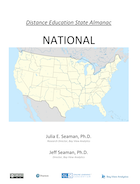
The latest reports from Bay View Analytics, based on U.S. Department of Education IPEDS data, show enrollments at degree-granting higher education institutions declined 5.0% for Fall 2019 compared to 2012. Undergraduate student enrollment dropped by 6.8% for this period, while the number of graduate students grew by 5.7%. Students studying at a distance increased by 33%, and the number of national institutions offering distance courses increased by 9.8%; 1.9 million fewer students were studying on-campus in Fall 2019 than in 2012.
“With eight years of longitudinal data, these reports show the trends in online education overall and at the state level. This report also provides a definitive benchmark for measuring the impact of the pandemic,” said Dr. Julia Seaman, Research Director of Bay View Analytics. "However, there is a wide range across states for institutions offering distance enrollment, from New Hampshire with 71.7% students taking any distance course to Rhode Island with only 15.4%; that may have provided vastly different experiences depending on where a student was enrolled."
The report is available as a comprehensive single report with information for all fifty states, as well as fifty individual state reports:
Alabama Alaska Arizona Arkansas California Colorado Connecticut Delaware Florida Georgia Hawaii Idaho Illinois Indiana Iowa Kansas Kentucky Louisiana Maine Maryland Massachusetts Michigan Minnesota Mississippi Missouri Montana Nebraska Nevada New Hampshire New Jersey New Mexico New York North Carolina North Dakota Ohio Oklahoma Oregon Pennsylvania Puerto Rico Rhode Island South Carolina South Dakota Tennessee Texas Utah Vermont Virginia Washington Washington DC West Virginia Wisconsin Wyoming

Grade Increase: Tracking Distance Education in the United States
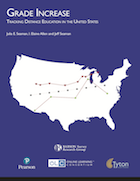
Grade Increase: Tracking Distance Education in the United States, by the Babson Survey Research Group, reveals distance student enrollments have increased for the fourteenth straight year in 2016. The most recent gain translates to over thirty percent of higher education students taking at least one distance education course. Growth, however, was uneven: public institutions grew by 7.3 percent, private non-profit institutions by 7.1 percent, and private for-profit institutions had their distance enrollments decline by 4.5 percent.
“The growth of distance enrollments has been relentless,” said study co-author Dr. Julia Seaman, research director of the Babson Survey Research Group. “They have gone up when the economy was expanding, when the economy was shrinking, when overall enrollments were growing, and now when overall enrollments are shrinking.”
Key report findings include:
- Distance education enrollments increased for the fourteenth straight year.
- The most recent year-to-year addition of 337,016 distance education students, a 5.6 percent increase, exceeds the gains seen over the past three years.
- 31.6 percent of all students now take at least one distance education course (a total of 6,359,121 students).
- Distance students are fairly evenly split between those who take both distance and non-distance courses (3,356,041 students), and those who take exclusively distance courses (3,003,080).
- Public institutions command the largest portion of distance education students, with 67.8 percent of all distance students.
- Distance education enrollments are highly concentrated; five percent of institutions account for almost half of all distance education students.
- Distance enrollments remain local: 52.8 percent of all students who took at least one distance course also took a course on-campus, and 56.1 percent of those who took only distance courses reside in the same state as the institution at which they are enrolled.
- Virtually no distance enrollments are international: only 0.7 percent of all distance students are located outside of the United States.
- The number of students studying on a campus has dropped by over one million (1,173,805, or 6.4 percent) between 2012 and 2016.
Download Grade Increase: Tracking Distance Education in the United States.
Digital Learning Compass: Distance Education State Almanac 2017
The Distance Education State Almanac 2017 reveals very different patterns of distance enrollments among the fifty states. Distance education enrollments, as a proportion of all higher education students, range from a low of 13% in Rhode Island to a high of over 50% in Arizona, New Hampshire, and West Virginia. Nevada has the highest proportion of their distance students (93%) coming from within the state.
"New for this report are insights into where students are receiving their educations — traditional on-campus, exclusively distance or a combination. Nationally, since 2012, we have seen a slow but steady decline of traditional on-campus students." Said study co-author Dr. Julia Seaman, Research Director of the Babson Survey Research Group. "Almost half the states have had negligible changes to their on-campus student enrollment, while another 19 match the national decreasing trend. However, four states — Utah, Idaho, Arizona and New Hampshire — had double digit decreases to their percent of on-campus students in favor of exclusively distant enrollment."
The report is available as a comprehensive single report with information for all fifty states, as well as fifty individual state reports:
Alabama
Alaska
Arizona
Arkansas
California
Colorado
Connecticut
Delaware
Florida
Georgia
Hawaii
Idaho
Illinois
Indiana
Iowa
Kansas
Kentucky
Louisiana
Maine
Maryland
Massachusetts
Michigan
Minnesota
Mississippi
Missouri
Montana
Nebraska
Nevada
New Hampshire
New Jersey
New Mexico
New York
North Carolina
North Dakota
Ohio
Oklahoma
Oregon
Pennsylvania
Rhode Island
South Carolina
South Dakota
Tennessee
Texas
Utah
Vermont
Virginia
Washington
West Virginia
Wisconsin
Wyoming
Digital Learning Compass: Distance Education Enrollment Report 2017
The Digital Learning Compass: Distance Education Enrollment Report 2017 examines the trends and patterns of distance education enrollments among U.S. degree-granting higher education institutions. The findings show that the number of higher education students taking at least one distance education course in 2015 now tops six million, about 30% of all enrollments. Enrollment growth was uneven across higher education sectors.
Since 2003, the Babson Survey Research Group has conducted national surveys on enrollments, activities, and attitudes regarding online learning for U.S. colleges and universities. When the U.S. Department of Education’s Integrated Postsecondary Education Survey (IPEDS) began collecting distance learning enrollments in the Fall of 2012, the Babson Survey Research Group switched to reporting the Department’s statistics.
The Digital Learning Compass: Distance Education Enrollment Report 2017 infographic is also available.
Online Report Card: Tracking Online Education in the United States
The 2015 Survey of Online Learning, Online Report Card: Tracking Online Education in the United States, conducted by the Babson Survey Research Group in partnership with the Online Learning Consortium (OLC), Pearson, WCET, StudyPortals, and Tyton Partners, reveals the number of higher education students taking at least one distance education course in 2015 is up 3.9% over the previous year. Growth, however, was uneven:, private non-profit institutions grew by 11.3% while private for-profit institutions saw their distance enrollments decline by 2.8%.
Related items for this report include:
Previous Higher Education Reports
Grade Level: Tracking Online Education in the United States
The 2014 Survey of Online Learning, Grade Level: Tracking Online Education in the United States, conducted by the Babson Survey Research Group and co-sponsored by the Online Learning Consortium (OLC), Pearson and Tyton Partners, reveals the number of higher education students taking at least one distance education course in 2014 is up 3.7 percent from the previous year.
“The study’s findings point to a competitive marketplace, in which traditional institutions are gaining ground on the for-profits in online and distance education,” said study co-author Jeff Seaman, co-director of the Babson Survey Research Group. “While the rapid pace of online learning growth has moderated, it still accounts for nearly three-quarters of all US higher education’s enrollment increases last year.”
Grade Change: Tracking Online Education in the United States
The 2013 Survey of Online Learning conducted by the Babson Survey Research Group reveals a 6.1 percent growth rate — the lowest for a decade, but still representing over 400,000 additional students taking at least one online course. The report is available in multiple formats:
- PDF version
- e-Book version for Kindle (.mobi format)
- e-Book version for iPad or Nook (.epub format)
- Report infographic
Changing Course: Ten Years of Tracking Online Education in the United States
The tenth annual survey, a collaborative effort between the Babson Survey Research Group and the College Board, is the leading barometer of online learning in the United States. Based on responses from over 2,800 academic leaders, the survey report reveals that the number of students taking at least one online course has now surpassed 6.7 million. Higher education adoption of Massive Open Online Courses remains low, with most institutions still on the sidelines. The report is available in multiple formats:
- PDF version: Changing Course: Ten Years of Tracking Online Education in the United States (PDF)
- e-Book version for Kindle (.mobi format): Changing Course - mobi ebook format
- e-Book version for iPad or Nook (.epub format): Changing Course - epub ebook format
- Report Infographic: Changing Course Infographic
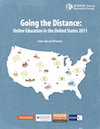
Going the Distance: Online Education in the United States, 2011
Based on responses from over 2,500 academic leaders, the complete survey report, "Going the Distance: Online Education in the United States, 2011" is available in multiple formats:
- PDF version: Going the Distance: Online Education in the United States, 2011 (pdf)
- eBook optimized for Kindle (.mobi format): Going the Distance - Kindle version
- eBook optimized for iPad (.epub format): Going the Distance - iPad version
- eBook optimized for Nook (.epub format): Going the Distance - Nook version
- We also invite you to download the Infographic
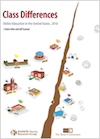
Class Differences: Online Education in the United States, 2010
The 2010 Sloan Survey of Online Learning, Class Differences: Online Education in the United States, 2010 (pdf), reveals that enrollment rose by almost one million students from a year earlier. The survey of more than 2,500 colleges and universities nationwide finds approximately 5.6 million students were enrolled in at least one online course in Fall 2009, the most recent term for which figures are available.
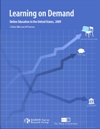
Learning on Demand: Online Education in the United States, 2009
The seventh annual Sloan Survey of Online Learning reveals that online enrollment rose by nearly 17 percent from a year earlier. The survey, a collaborative effort between the Babson Survey Research Group, the College Board, and the Sloan Consortium, is the leading barometer of online learning in the United States. Using results from more than 2,500 colleges and universities nationwide, the report finds approximately 4.6 million students were enrolled in at least one online course in Fall 2008.
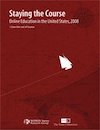
Staying The Course - Online Education in the United States, 2008
The 2008 Sloan Survey of Online Learning reveals that enrollment rose by more than twelve percent from a year earlier. The survey of more than 2,500 colleges and universities nationwide finds approximately 3.94 million students were enrolled in at least one online course in Fall 2007. The sixth annual survey, a collaborative effort between the Babson Survey Research Group, the College Board and the Sloan Consortium, is the leading barometer of online learning in the United States.
Online Nation: Five Years of Growth in Online Learning
Online Nation: Five Years of Growth in Online Learning represents the fifth annual report on the state of online learning in U.S. higher education. This year’s study, like those for the previous four years, is aimed at answering some of the fundamental questions about the nature and extent of online education. Supported by the Alfred P. Sloan Foundation and based on responses from more than 2,500 colleges and universities, the study addresses the following key questions:
- How Many Students are Learning Online?
- Where has the Growth in Online Learning Occurred?
- Why do Institutions Provide Online Offerings?
- What are the Prospects for Future Online Enrollment Growth?
- What are the Barriers to Widespread Adoption of Online Education?
Making the Grade: Online Education in the United States, 2006
Making the Grade: Online Education in the United States, 2006 is based on data collected for the fourth annual national report on the state of online education in U.S. higher education. Supported by the Alfred P. Sloan Foundation and conducted by the Babson Survey Research Group in partnership with the College Board, the report, based on responses from over 2,200 colleges and universities, examines the nature and extent of online learning among U.S. higher education institutions.
Making the Grade: Online Education in the United States, 2006 - Midwestern Edition
Making the Grade: Online Education in the United States, 2006 - Midwestern Edition is based on data collected for the fourth annual national report on the state of online education in U.S. higher education. Supported by the Alfred P. Sloan Foundation and conducted by the Babson Survey Research Group in partnership with the College Board, the report, based on responses from over 2,200 colleges and universities, examines the nature and extent of online learning among U.S. higher education institutions.
Making the Grade: Online Education in the United States, 2006 - Southern Edition
Making the Grade: Online Education in the United States, 2006 - Southern Edition is based on data collected for the fourth annual national report on the state of online education in U.S. higher education. Supported by the Alfred P. Sloan Foundation and conducted by the Babson Survey Research Group in partnership with the College Board, the report, based on responses from over 2,200 colleges and universities, examines the nature and extent of online learning among U.S. higher education institutions.
Blending In: The Extent and Promise of Blended Education in the United States
Blending In: The Extent and Promise of Blended Education in the United States is aimed at answering some of the fundamental questions about the nature and extent of education in the United States. Unlike the previous reports that focused exclusively on online learning, the current report examines blended (also called hybrid) instruction. The findings are based on three years of responses from a national sample of over 1,000 colleges and universities. Additional results are presented from an Eduventures-conducted national survey of 2,033 U.S. adults interested in postsecondary education in the next three years.
Growing by Degrees: Online Education in the United States, 2005
Growing by Degrees: Online Education in the United States, 2005 represents the third annual report on the state of online education in U.S. higher education. Supported by the Alfred P. Sloan Foundation and based on responses from over 1,000 colleges and universities, this year’s study, like those for previous years, is aimed at answering some of the fundamental questions about the nature and extent of online education.
Growing by Degrees: Online Education in the United States, 2005 - Southern Edition
Growing by Degrees: Online Education in the United States, 2005 - Southern Edition is based on data collected for the third annual national report on the state of online education in U.S. higher education. Supported by the Alfred P. Sloan Foundation and based on responses from over 400 southern colleges and universities, this special report examines the nature and extent of online learning among the 16 southern states that make up the Southern Regional Education Board (SREB).
The survey analysis is based on a comprehensive nationwide sample of active, degree-granting institutions of higher education in the United States that are open to the public.
Entering the Mainstream: The Quality and Extent of Online Education in the United States, 2003 and 2004
The 2004 Sloan Survey of Online Learning, Entering the Mainstream: The Quality and Extent of Online Education in the U. S. shows online enrollments continue to grow at rates faster than for the broader student population. Institutes of higher education expect this rate of growth to continue increasing. The second annual survey is based on responses from over 1,100 colleges and universities and represents the state of online education in U.S. higher education. The comprehensive survey by Babson College and Sloan-C concludes that the expected average growth rate for online students for 2004 is 24.8%, up from 19.8% in 2003.
Sizing the Opportunity: The Quality and Extent of Online Education in the United States, 2002 and 2003
The 2003 Sloan Survey of Online Learning polled academic leaders and was weighted to allow for inferences about all degree-granting institutions open to the public. When asked to compare the online learning outcomes with those of face-to-face instruction, a majority said they are equal. Two out of every three also responded that online learning is critical to their long-term strategy. Sizing the Opportunity: The Quality and Extent of Online Education in the United States, 2002 and 2003 also looks at characteristics of online learners, student and faculty perceptions as well as how private and public institutions approach online learning.
Recent Publications
Digital Learning Pulse Surveys
- Infographic: 2023-2024 Digital Learning Pulse Survey
- The Digital Transformation of the Community College
- Planning for a Smaller Future: Dealing with Declining Enrollments
Course Material Affordability
- Pennsylvania Course Materials Survey 2023
- Pennsylvania Course Materials Presentation
- Course Material Webinar Slides
Open Educational Resources
- Digitally Established: Educational Resources in U.S. Higher Education, 2023
- Curricula of Many Sources: Educational Resources in U.S. K-12, 2023
- Research Brief: Digital and OER Textbook Adoption
- Research Brief: Faculty Satisfaction with Course Materials varies by Publisher
STEM
- Teaching Online: STEM Education in the Time of COVID
- What Makes a STEM Student
- Perceptions of the Future of STEM Education
Distance Education
- Digital Faculty: Faculty Social Media Use and Communications
- Infographic: Digital Faculty
- Grade Increase: Tracking Distance Education in the United States
Follow us on
 Twitter and
  LinkedIn.
Privacy
All survey respondents are provided complete anonymity. No personally identifiable information is released. Full privacy policy.